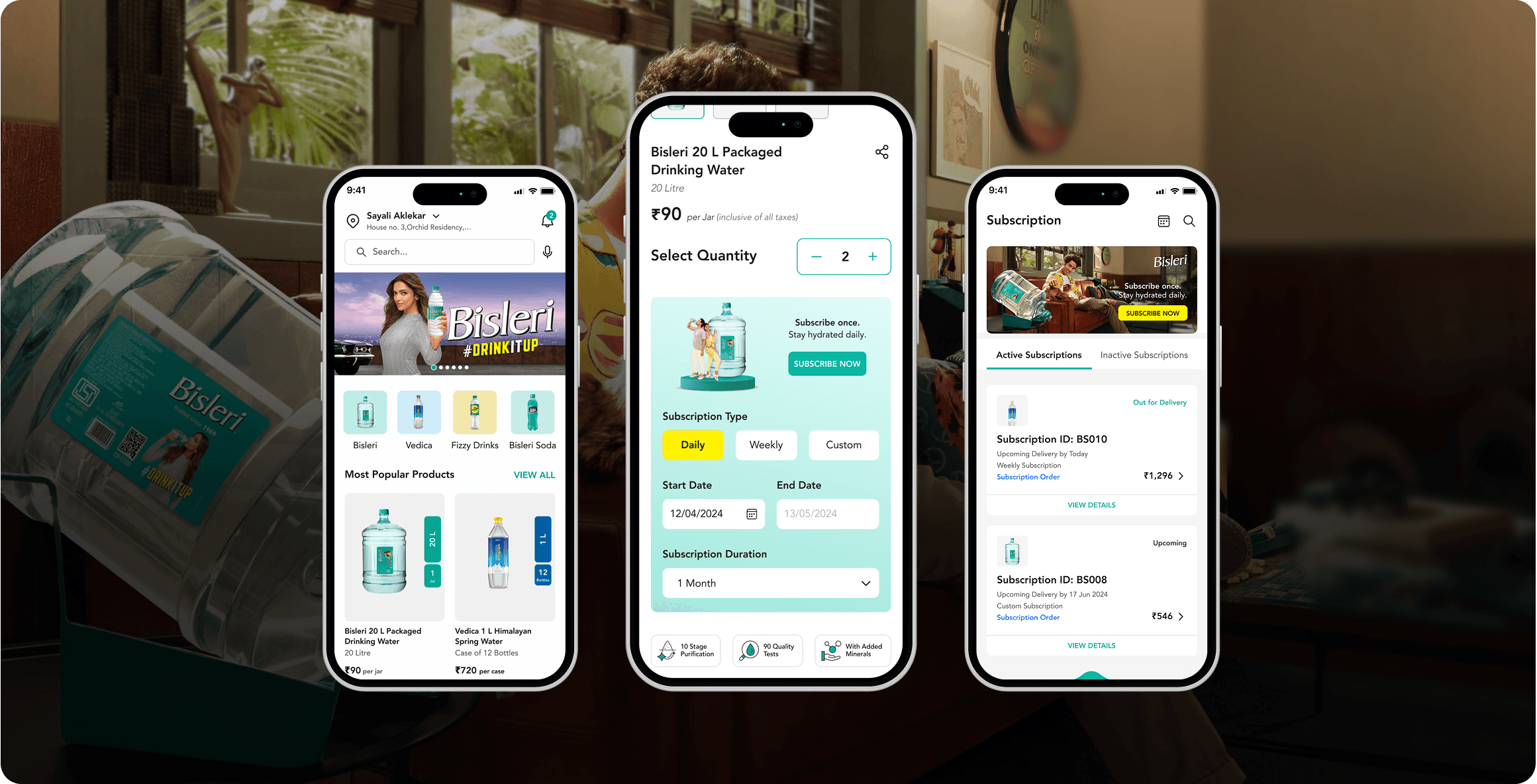
Designed a subscription model flow that increased customer retention for
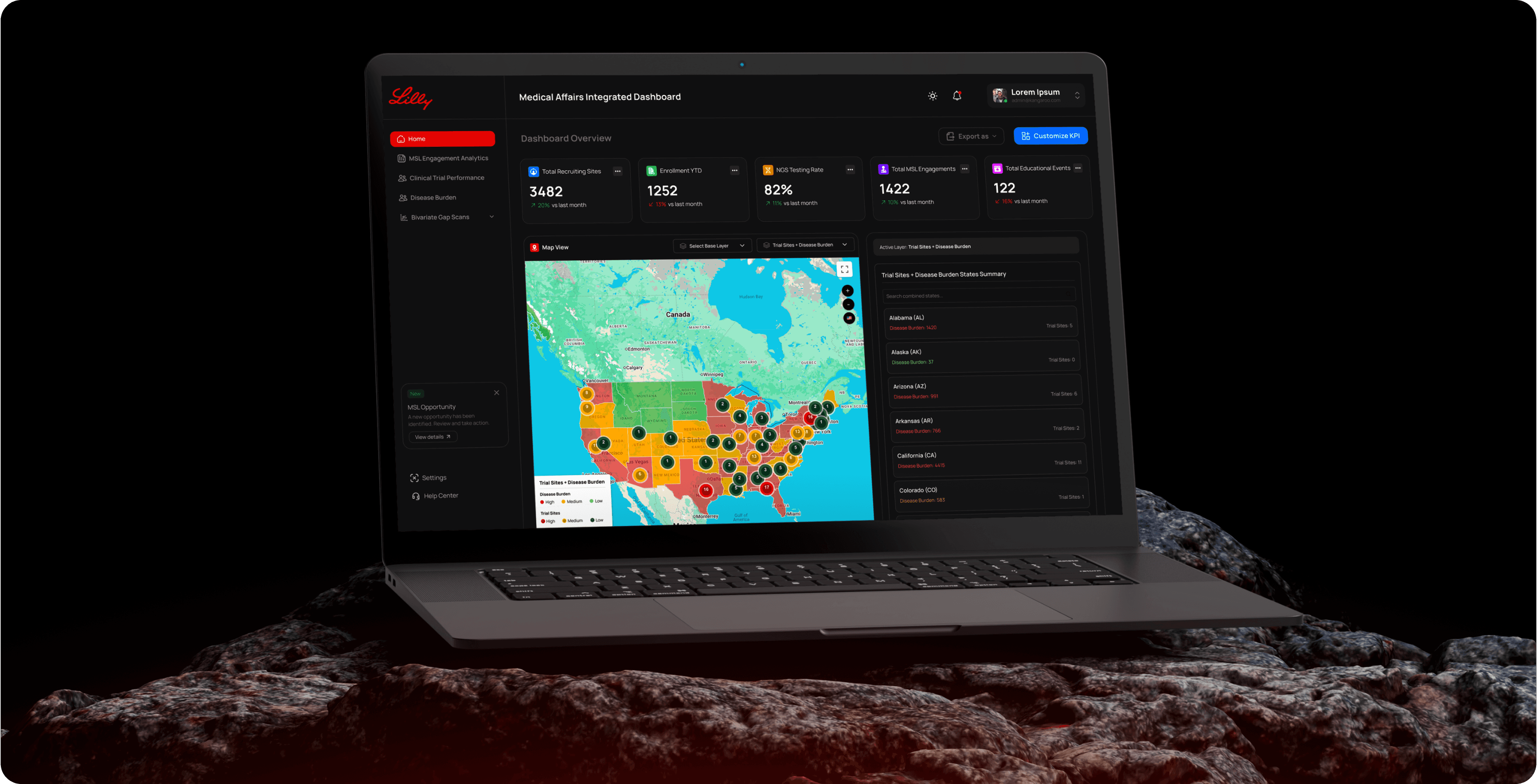
Designed a geo-analytical dashboard enabling data-driven market analysis
for
Impact
35%
increase in customer retention
Reduced Analysis Time with Unified Geo-Analytics
Designed a flexible subscription experience that introduced
wallet and external refund logic, addressed no-balance edge cases, and improved customer retention by 35%.
24%
reduced time-to-completion
Increased Multi-Signal Market Insights
Reduced time-to-completion by 24% (~1m 04s) by optimizing
the subscription journey and removing friction across the
end-to-end experience.
Enabled teams to compare disease burden, engagement coverage,
and trial activity to identify opportunity gaps.
16%
increase in recurring revenue
Improved Data-Driven MSL Deployment
By embedding transparency, flexibility, and operational clarity into the subscription journey, the redesigned experience drove a 16% increase in recurring revenue.
Supported structured prioritization of Medical Science Liaison deployment through state-to-city drill-down and multi-signal comparison.
Designed a geo-analytical dashboard enabling data-driven market analysis for
Impact
Reduced Analysis Time with Unified Geo-Analytics
Consolidated multiple regional datasets into one interface, enabling faster identification of priority markets.
Increased Multi-Signal Market Insights
Enabled teams to compare disease burden, engagement coverage,
and trial activity to identify opportunity gaps.
Improved Data-Driven
MSL Deployment
Supported structured prioritization of Medical Science Liaison deployment through state-to-city drill-down and multi-signal comparison.
Problem Overview
User Problem
Users needed to interpret multiple regional signals such as disease burden, engagement coverage, and clinical trial activity to determine where to focus field efforts. These signals were distributed across different systems and reports, making it difficult to quickly identify high-opportunity regions or detect emerging patterns.
Business Problem
The business required a centralized system that could integrate multiple regional signals and support data-driven prioritization across different stages of the drug lifecycle.
Client
Lilly
Platform
UI/UX Designer
Problem Overview
User Problem
Users needed to interpret multiple regional signals such as disease burden, engagement coverage, and clinical trial activity to determine where to focus field efforts. These signals were distributed across different systems and reports, making it difficult to quickly identify high-opportunity regions or detect emerging patterns.
Business Problem
The business required a centralized system that could integrate multiple regional signals and support data-driven prioritization across different stages of the drug lifecycle.
Client
Lilly
Platform
UI/UX Designer
Designed a subscription model flow that increased customer retention for
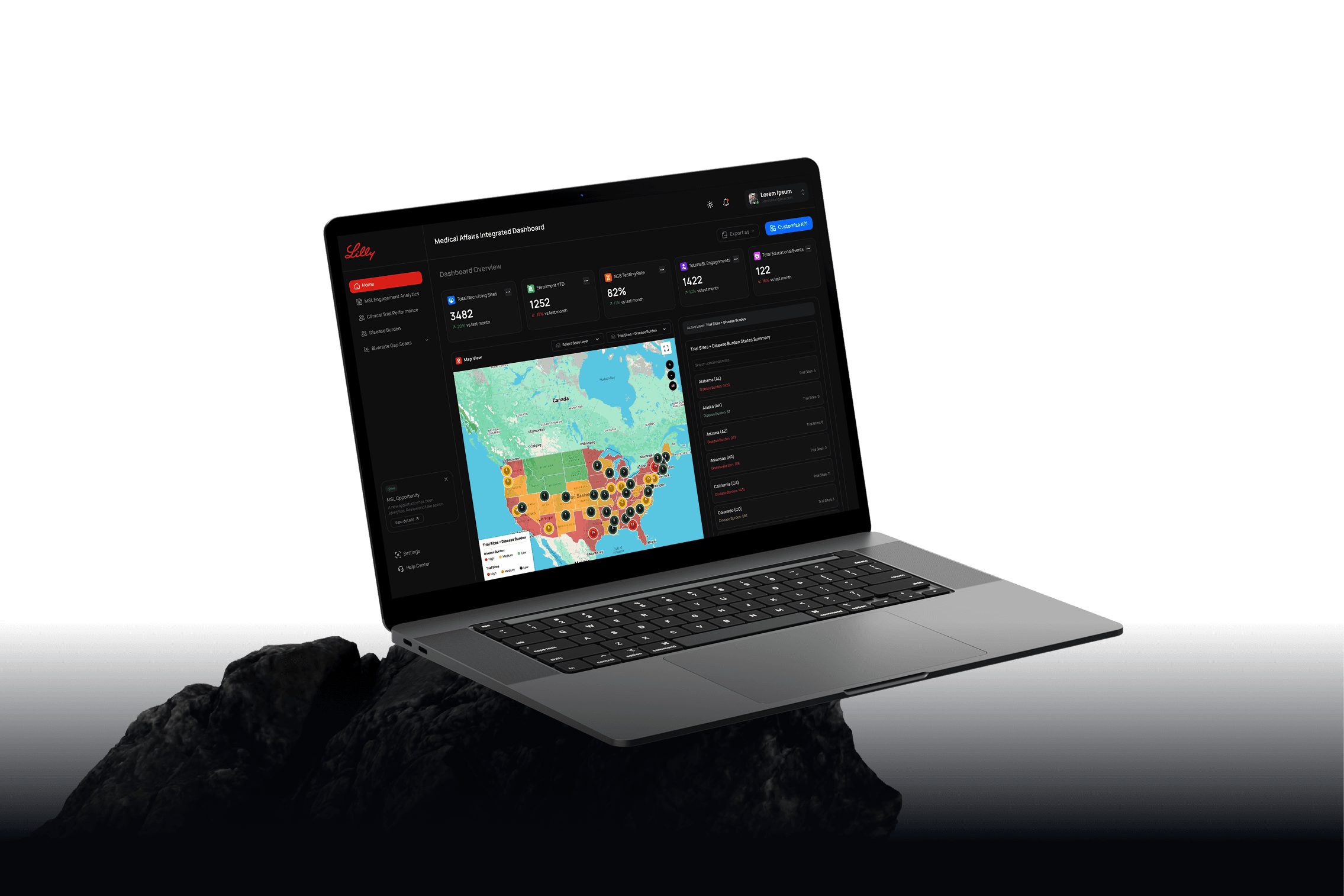
Designed a geo-analytical dashboard enabling data driven market analysis for
Impact
35%
increase in customer retention
Reduced Analysis Time with Unified Geo-Analytics
Designed a flexible subscription experience that introduced
wallet and external refund logic, addressed no-balance edge
cases, and improved customer retention by 35%.
Consolidated multiple regional datasets into one interface, enabling faster identification of priority markets.
24%
reduced time-to-completion
Increased Multi-Signal Market Insights
Reduced time-to-completion by 24% (~1m 04s) by optimizing the subscription journey and removing friction across the end-to-end experience.
Enabled teams to compare disease burden, engagement coverage,
and trial activity to identify opportunity gaps.
16%
increase in recurring revenue
Improved Data-Driven
MSL Deployment
By embedding transparency, flexibility, and operational clarity into the subscription journey, the redesigned experience drove a
16% increase in recurring revenue.
Supported structured prioritization of Medical Science Liaison deployment through state-to-city drill-down and multi-signal comparison.
My Approach
01 - Heuristic Evaluation
01 - Stakeholder Meeting
Conducted a heuristic review of the existing subscription and wallet flows to identify usability issues.
Discussions with Medical Affairs, strategy, and data teams revealed key signals used for market prioritization.
02 - User Interviews
Interviewed 6 users to understand subscription decisions and wallet/refund expectations.
Interviewed 4 users to understand how regional signals are interpreted when evaluating opportunity markets.
03 - Behavioural Analytics
03 - Insight Synthesis
Analysed drop-off points in the existing subscription funnel and to identify patterns in session data.
Clustered raw interview insights to identify decision patterns and key signals used in regional prioritization.
04 - Usability Testing
Participants interacted with the current subscription flow to identify friction points and confusion areas.
Tested high-fidelity dashboard prototypes to evaluate how users interpret geo-analytical signals.
05 - Prototype Testing
Validated the new subscription flow with wallet, refund transparency, and flexible plan controls.
Validated map interactions, KPI prioritization, and multi-signal comparison for regional analysis.
06 - Design Handoff
Translated validated flows into specs and aligned with engineering for subscription, wallet, and refund logic.
Translated validated dashboards into specifications and collaborated with engineering for data integration.
Problem Overview
User Problem
Users lacked clarity and control within the subscription experience. Ambiguity around refund handling combined with rigid plan structures made it difficult to select the right subscription type, resulting in friction and incomplete conversions.
Users needed to interpret multiple regional signals such as disease burden, engagement coverage, and clinical trial activity to determine where to focus field efforts. These signals were distributed across different systems and reports, making it difficult to quickly identify high-opportunity regions or detect emerging patterns.
Business Problem
The existing subscription model lacked flexibility and automation, constraining recurring revenue growth and long-term retention. The business required a scalable subscription framework supporting daily, weekly, and custom plans with automated wallet-based transactions.
The business required a centralized system that could integrate multiple regional signals and support data-driven prioritization across different stages of the drug lifecycle.
Client
Bisleri
Lilly
Platform
Mobile & Desktop B2C Application
Enterprise Web Dashboard

My Approach
My Approach
03 - Behavioural Analytics
03 - Insight Synthesis
Analysed drop-off points in the existing subscription funnel and to identify patterns in session data.
Clustered raw interview insights to identify decision patterns and key signals used in regional prioritization.
04 - Usability Testing
Participants interacted with the current subscription flow to identify friction points and confusion areas.
Tested high-fidelity dashboard prototypes to evaluate how users interpret geo-analytical signals.
05 - Prototype Testing
Validated the new subscription flow with wallet, refund transparency, and flexible plan controls.
Validated map interactions, KPI prioritization, and multi-signal comparison for regional analysis.
06 - Design Handoff
Translated validated flows into specs and aligned with engineering for subscription, wallet, and refund logic.
Translated validated dashboards into specifications and collaborated with engineering for data integration.
01 - Stakeholder Meeting
Discussions with Medical Affairs, strategy, and data teams revealed key signals used for market prioritization.
02 - User Interviews
Interviewed 4 users to understand how regional signals are interpreted when evaluating opportunity markets.
03 - Insight Synthesis
Clustered raw interview insights to identify decision patterns and key signals used in regional prioritization.
04 - Usability Testing
Tested high-fidelity dashboard prototypes to evaluate how users interpret geo-analytical signals.
05 - Prototype Testing
Validated map interactions, KPI prioritization, and multi-signal comparison for regional analysis.
06 - Design Handoff
Translated validated dashboards into specifications and collaborated with engineering for data integration.
Solution
01
Map-First
Geo-Analytical Interface
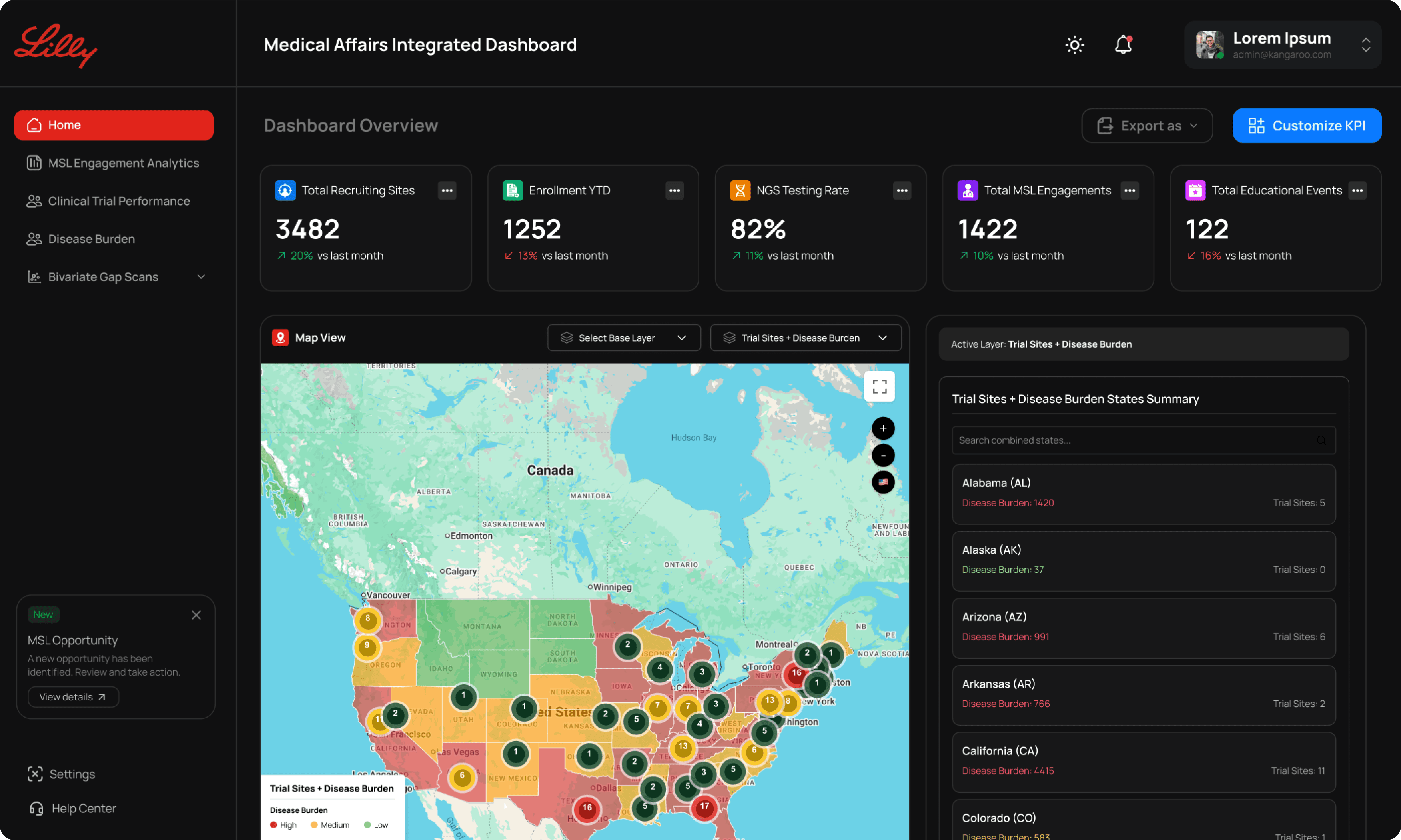
Research revealed that Medical Affairs leadership primarily think about opportunity in geographic terms.
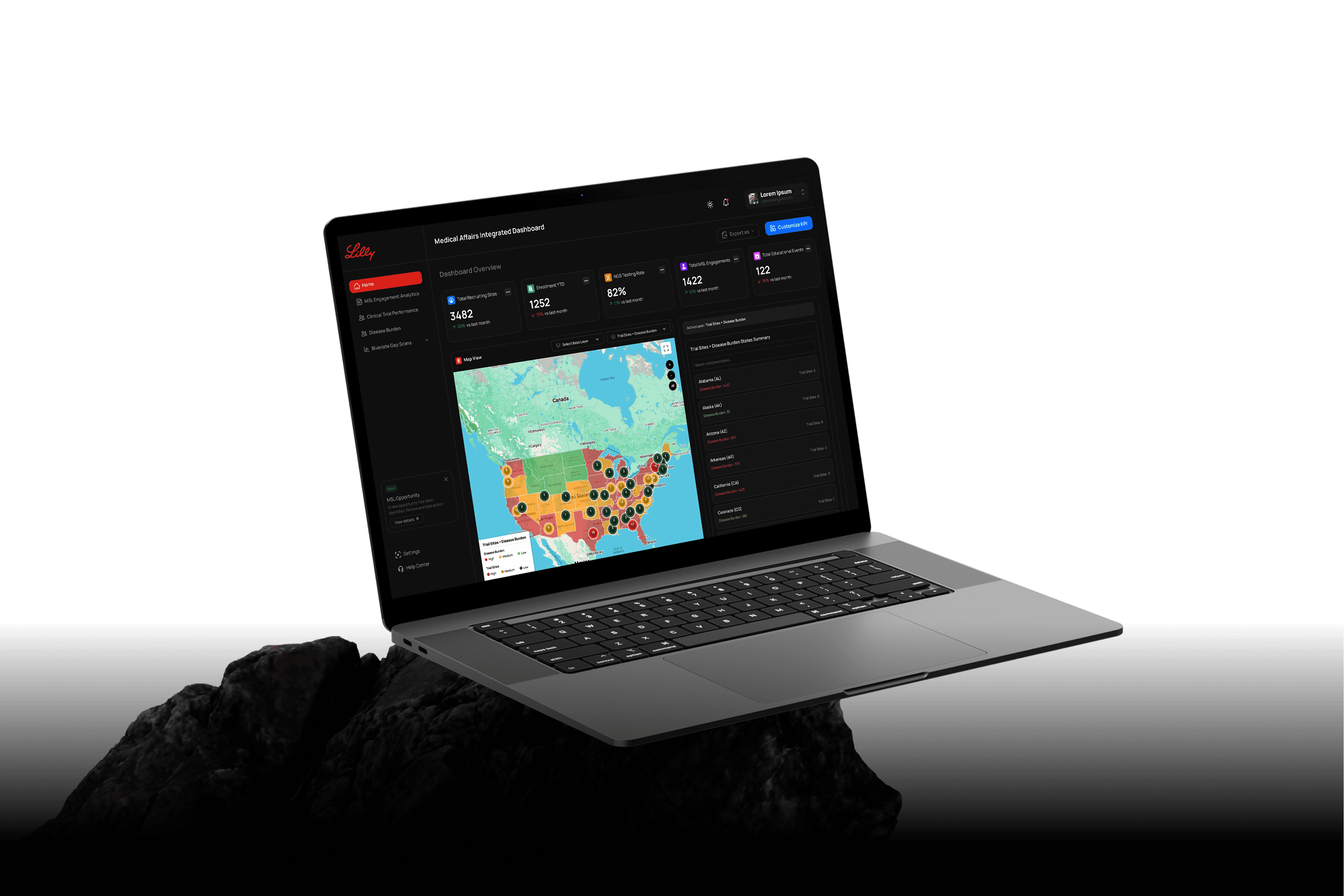
To address this, the dashboard introduced a map-centric interface that visually represents disease burden, engagement coverage, and clinical trial activity across
the U.S.
02
Progressive Geographic
Drill-Down
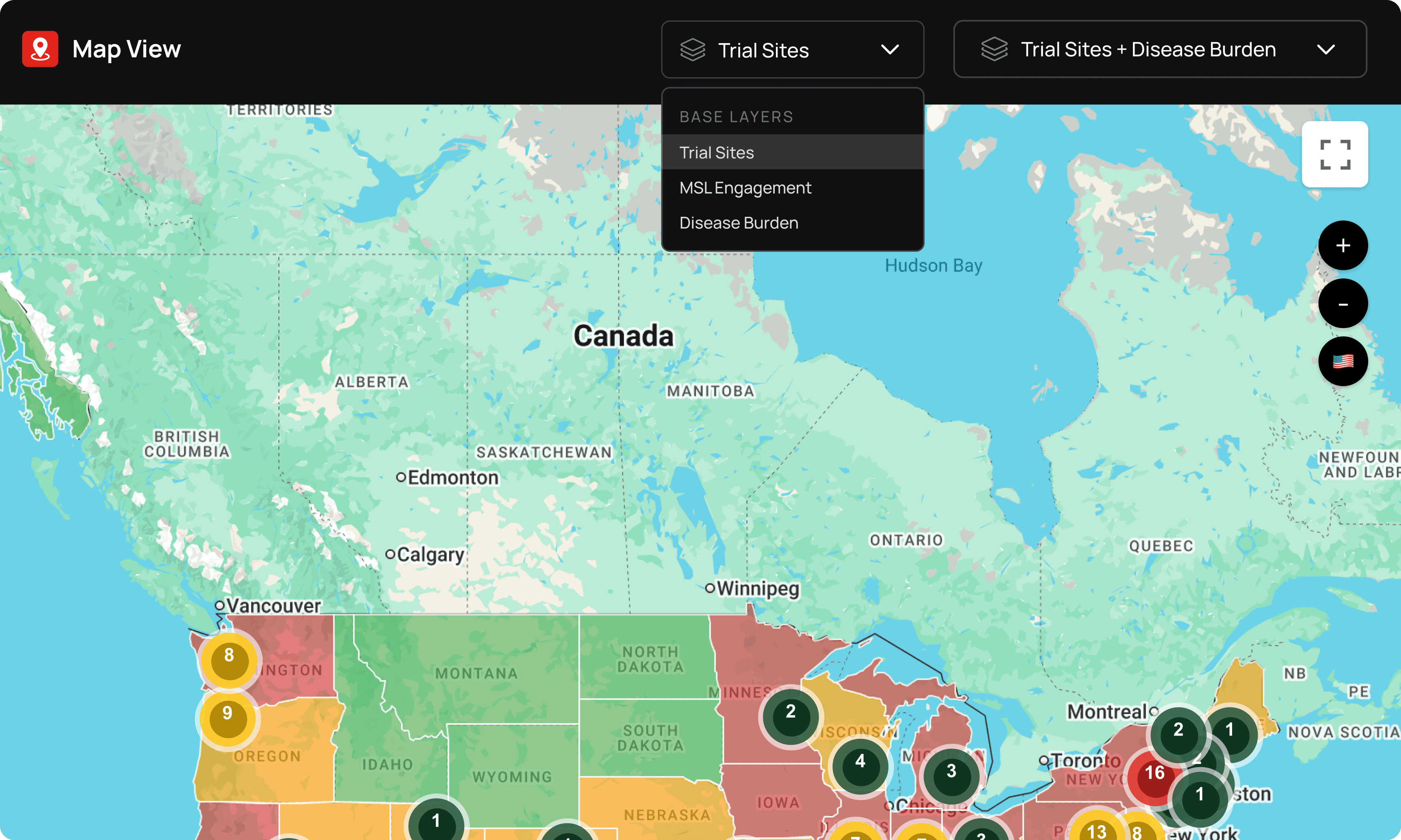
Medical Affairs leadership typically begin analysis with a broad national perspective, then narrow down to specific regions where opportunity signals appear strongest.
To support this workflow, the dashboard introduced a progressive drill-down model, allowing users to move seamlessly between geographic layers: National overview → State-level → City-level
03
Prioritized
KPI Framework
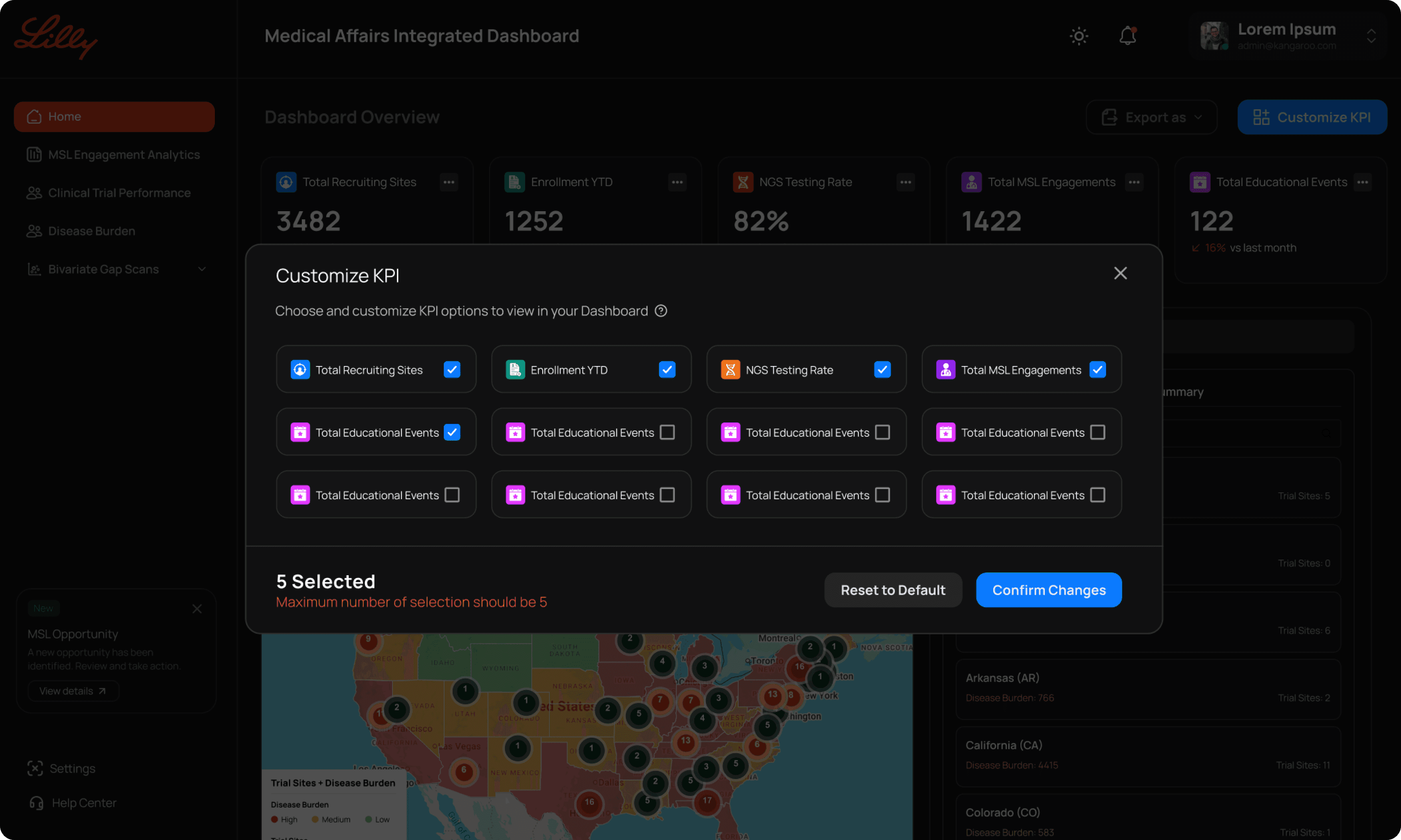
Users reported difficulty interpreting dashboards that displayed too many metrics simultaneously. Decision-making often depended on a small set of critical signals, while other metrics were used only for deeper validation.
The dashboard therefore introduced a prioritized KPI framework, highlighting the most decision-critical signals by default.
04
Multi-Signal Comparison
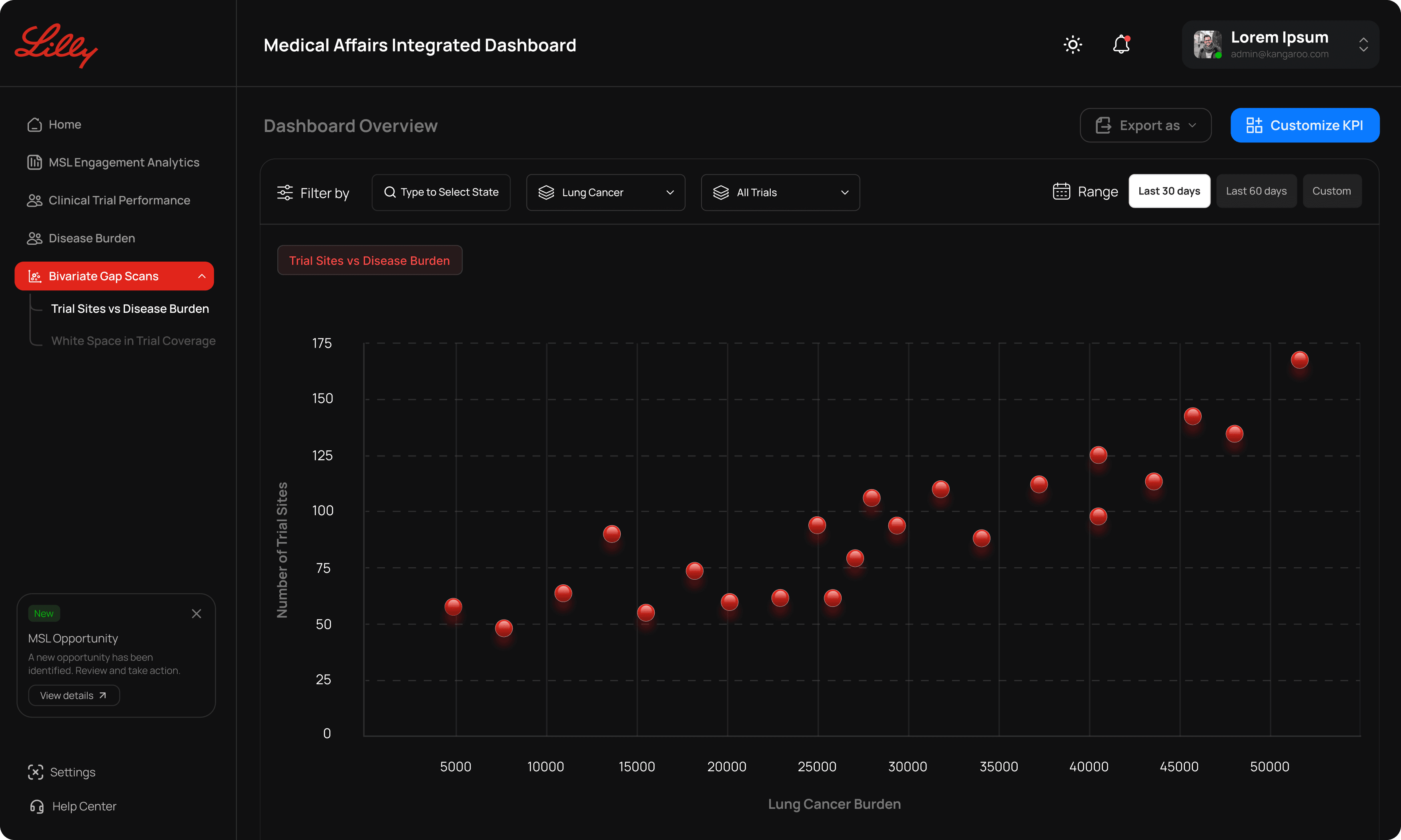
Opportunity decisions rarely depend on a single metric. Instead, users must evaluate multiple datasets simultaneously, such as disease burden, engagement coverage, and clinical trial activity.
The dashboard enabled side-by-side comparison of multiple signals, allowing users to assess whether regions with high disease burden also lacked engagement coverage or
active trials.
Solution
01
Map-First Geo-Analytical Interface
Research revealed that Medical Affairs leadership primarily think about opportunity in geographic terms.
To address this, the dashboard introduced a map-centric interface that visually represents disease burden, engagement coverage, and clinical trial activity across the U.S.
02
Progressive Geographic
Drill-Down
Medical Affairs leadership typically begin analysis with a broad national perspective, then narrow down to specific regions where opportunity signals appear strongest.
To support this workflow, the dashboard introduced a progressive drill-down model, allowing users to move seamlessly between geographic layers: National overview → State-level → City-level
03
Prioritized KPI Framework
Users reported difficulty interpreting dashboards that displayed too many metrics simultaneously. Decision-making often depended on a small set of critical signals, while other metrics were used only for deeper validation.
The dashboard therefore introduced a prioritized KPI framework, highlighting the most decision-critical signals by default.
04
Multi-Signal Comparison
Opportunity decisions rarely depend on a single metric. Instead, users must evaluate multiple datasets simultaneously, such as disease burden, engagement coverage, and clinical trial activity.
The dashboard enabled side-by-side comparison of multiple signals, allowing users to assess whether regions with high disease burden also lacked engagement coverage or
active trials.
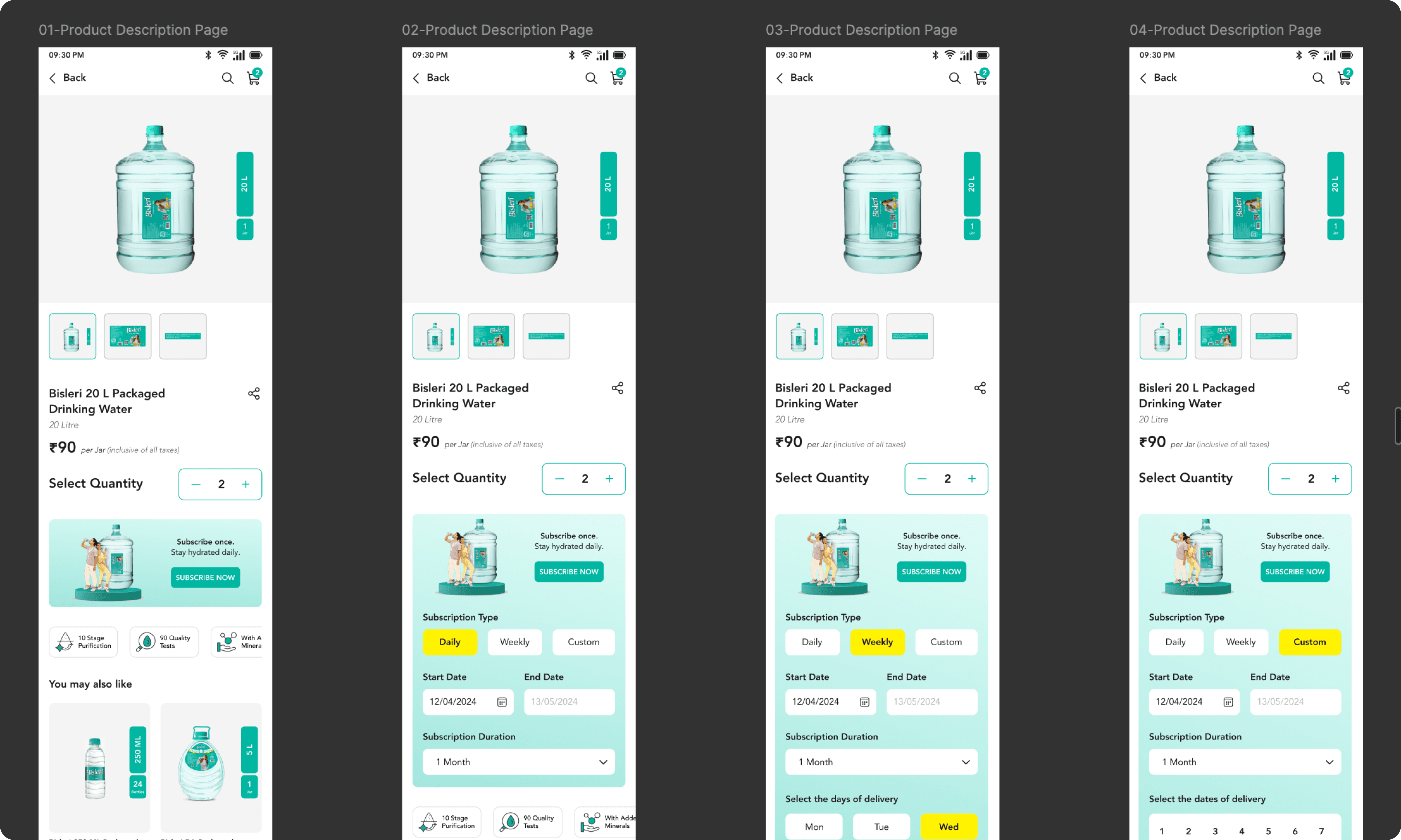
Solution
01
Modular Subscription
Framework
01
Map-First Geo-Analytical Interface
Designed a scalable subscription model supporting:
Daily
Weekly
Custom frequency plans
Each plan was structured with guided defaults to reduce cognitive load while still allowing controlled personalization. The architecture ensured compatibility with backend routing logic and recurring payment mandates.
Research revealed that Medical Affairs leadership primarily
think about opportunity in
geographic terms.
To address this, the dashboard introduced a map-centric interface that visually represents disease burden, engagement coverage, and clinical trial activity across the U.S.
02
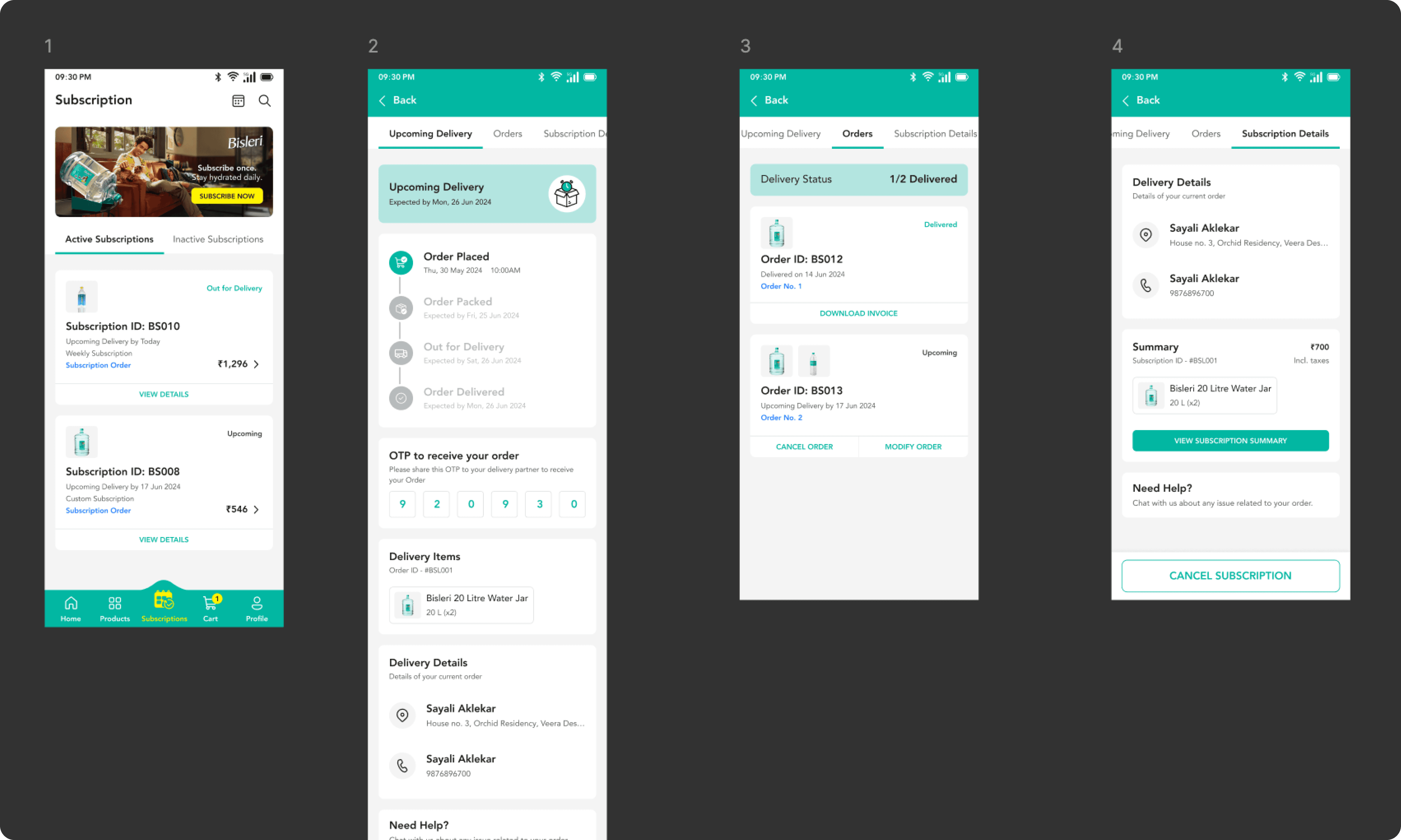
Restructured
Child Order & Subscription Flow
02
Progressive Geographic Drill-Down
The subscription system was built as a reusable framework that:
Reduced redundant steps & Simplifying plan selection across child orders & subscription orders
Minimized backtracking behavior observed in usability tests
Enabled flexible features like pause, skip, or predictive scheduling
Medical Affairs leadership typically begin analysis with a broad national perspective, then narrow down to specific regions where opportunity signals appear strongest.
To support this workflow, the dashboard introduced a progressive drill-down model, allowing users
to move seamlessly between geographic layers: National
overview → State-level → City-level
03
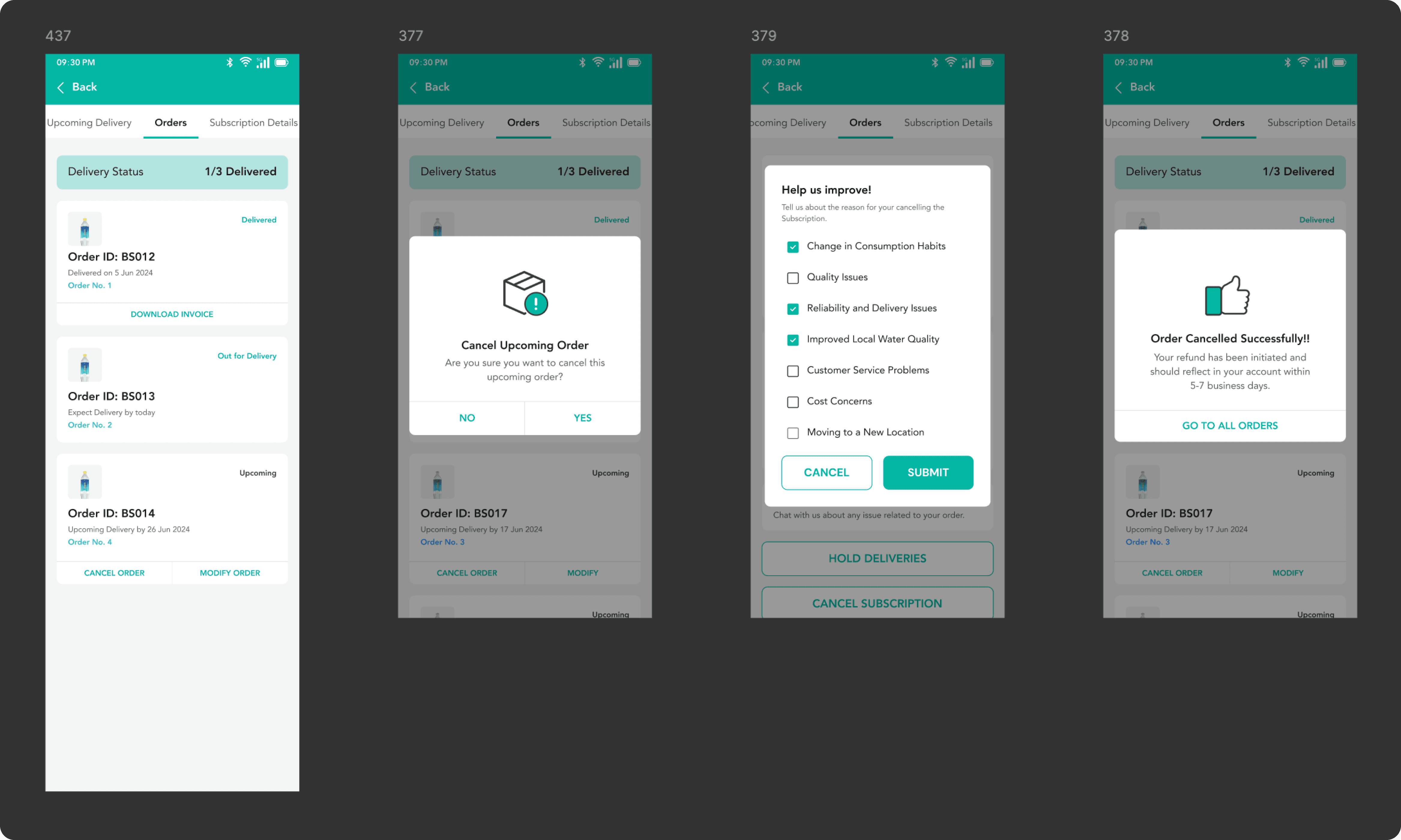
Subscription Cancellation Flow
along with Refund
03
Prioritized KPI Framework
The cancellation flow determines refund eligibility based on the original payment source.
The flow identifies active vs inactive subscriptions and calculates refund eligibility before confirming cancellation.
If the subscription amount was debited from the in-app wallet, the remaining balance is automatically refunded back to the user’s wallet.
Users reported difficulty interpreting dashboards that displayed too many metrics simultaneously. Decision-making often depended on a small set of critical signals, while other metrics were used only for deeper validation.
The dashboard therefore introduced a prioritized KPI framework, highlighting the most decision-critical signals by default.
04
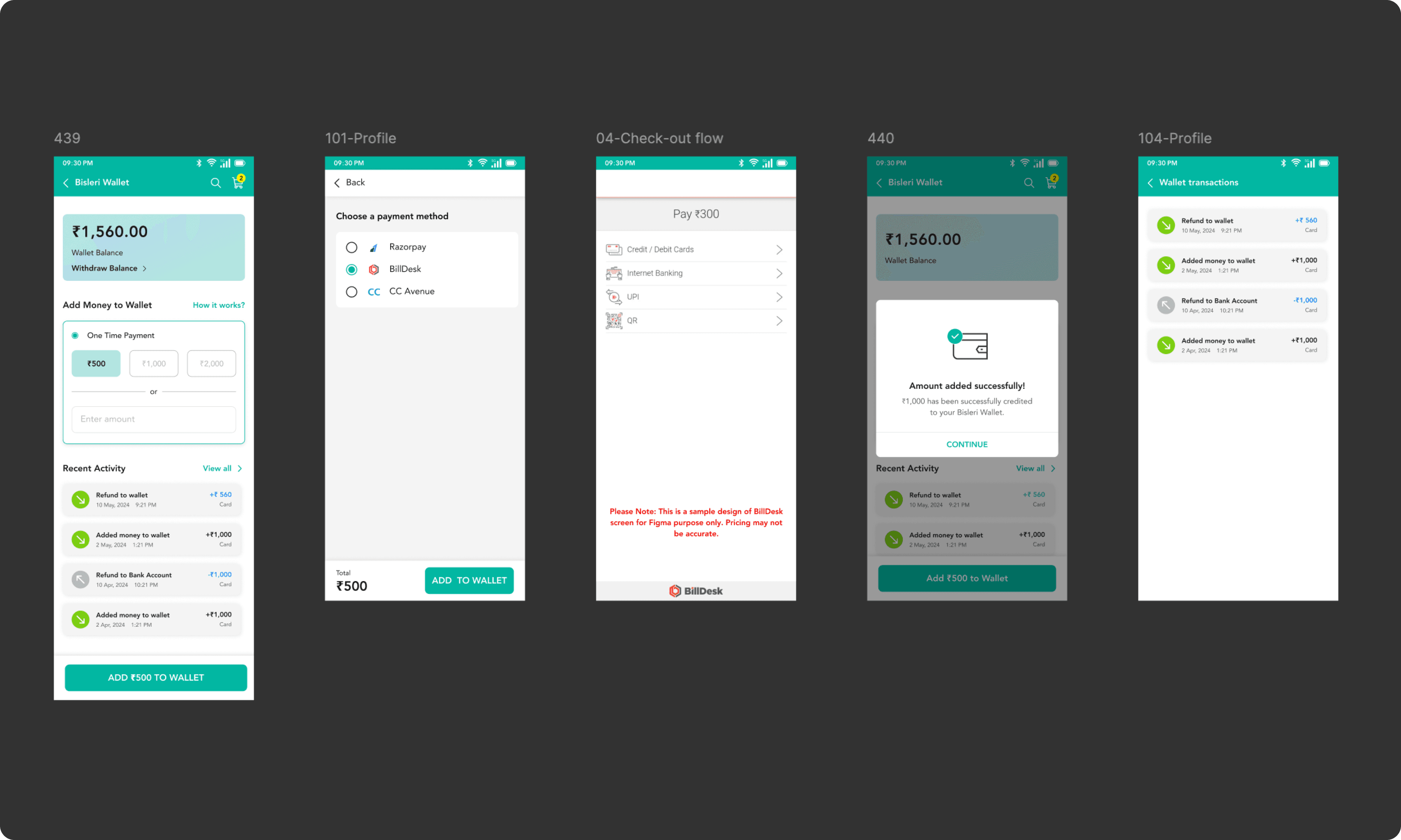
Wallet
Top-Up Experience
04
Multi-Signal Comparison
The wallet top-up experience was redesigned to support seamless subscription payments
Simplifying the wallet recharge flow, allowing users to quickly add funds when subscription payments fail or balances are low.
Enabling flexible wallet top-ups with preset amounts (₹500, ₹1000) and custom entries to ensure sufficient balance for upcoming deliveries.
Opportunity decisions rarely depend on a single metric. Instead, users
must evaluate multiple datasets simultaneously, such as disease burden, engagement coverage, and clinical trial activity.
The dashboard enabled side-by-side comparison of multiple signals, allowing users to assess whether regions with high disease burden
also lacked engagement coverage
or active trials.
Trade-Offs
Trade-Offs
Trade-Offs
Signal Accuracy vs Decision Speed
Signal Accuracy vs Decision Speed
Signal Accuracy vs Decision Speed
Context:
Medical Affairs leaders needed to compare multiple signals (disease burden, engagement coverage) before prioritizing regions.
Context:
Medical Affairs leaders needed to compare multiple signals (disease burden, engagement coverage) before prioritizing regions.
Decision:
Prioritized decision-critical KPIs in the default view while enabling deeper data exploration through structured filters and comparisons.
Decision:
Prioritized decision-critical KPIs in the default view
while enabling deeper data exploration through structured filters and comparisons.
Decision:
Prioritized decision-critical KPIs in the default view while enabling deeper data exploration through structured filters and comparisons.
Trade-off:
Showing every supporting dataset increased analytical depth but slowed decision-making and created information overload.
Trade-off:
Showing every supporting dataset increased analytical depth but slowed decision-making and created information overload.
Mitigation:
Enabled leadership to quickly identify high-opportunity regions while supporting deeper regional analysis and decision-making.
Mitigation:
Enabled leadership to quickly identify high-opportunity regions while supporting deeper regional analysis and decision-making.
Geographic Precision vs Data Reliability
Geographic Precision vs Data Reliability
Geographic Precision vs Data Reliability
Context:
Some datasets were available only at the state level, while others contained more detailed city-level insights.
Context:
Some datasets were available only at the state level, while others contained more detailed city-level insights.
Decision:
Used state-level visualization as the primary layer, with city insights revealed when reliable data was available.
Decision:
Designed structured flexibility with guided defaults and clear plan comparisons to balance choice and clarity.
Trade-off:
Displaying all signals at city-level would suggest precision that the underlying data did not always support.
Trade-off:
Displaying all signals at city-level would suggest precision that the underlying data did not always support.
Mitigation:
Maintained analytical integrity by preventing misleading geographic comparisons and conclusions.
Mitigation:
Maintained analytical integrity by preventing misleading geographic comparisons and conclusions.
Analytical Power vs Decision Simplicity
Analytical Power vs Decision Simplicity
Analytical Power vs Decision Simplicity
Context:
Advanced users wanted more flexible filtering across multiple signals, regions, time periods, and comparative data views.
Context:
Advanced users wanted more flexible filtering across multiple signals, regions, time periods, and comparative data views.
Decision:
We designed structured filters and guided comparison views, enabling powerful analysis without overwhelming the interface.
Decision:
We designed structured filters and guided comparison views, enabling powerful analysis without overwhelming the interface.
Trade-off:
Providing unlimited analytical controls increased complexity and slowed the decision process for leadership users.
Trade-off:
Providing unlimited analytical controls increased complexity and slowed the decision process for leadership users.
Mitigation:
Balanced advanced analytical capabilities with
a clear and efficient workflow for faster
decision-making.
Mitigation:
Balanced advanced
analytical capabilities
with a clear and efficient workflow for faster
decision-making.
Mitigation:
Chosen trust and expectation alignment over short-term conversion gains.
The redesigned subscription framework transformed a rigid, friction-heavy flow into a scalable and operationally aligned model that balanced flexibility, transparency, and backend feasibility. The solution reduced ambiguity, stabilized recurring revenue mechanics, and established a foundation for long-term subscription growth.
Outcome
Outcome
The Integrated Dashboard improved clarity in regional prioritization, enabled faster identification of high-opportunity markets, and supported more strategic deployment of Medical Science Liaisons across the U.S. The dashboard established a scalable foundation for data-driven decision making across multiple therapeutic areas and product lifecycle stages.